
Worship room
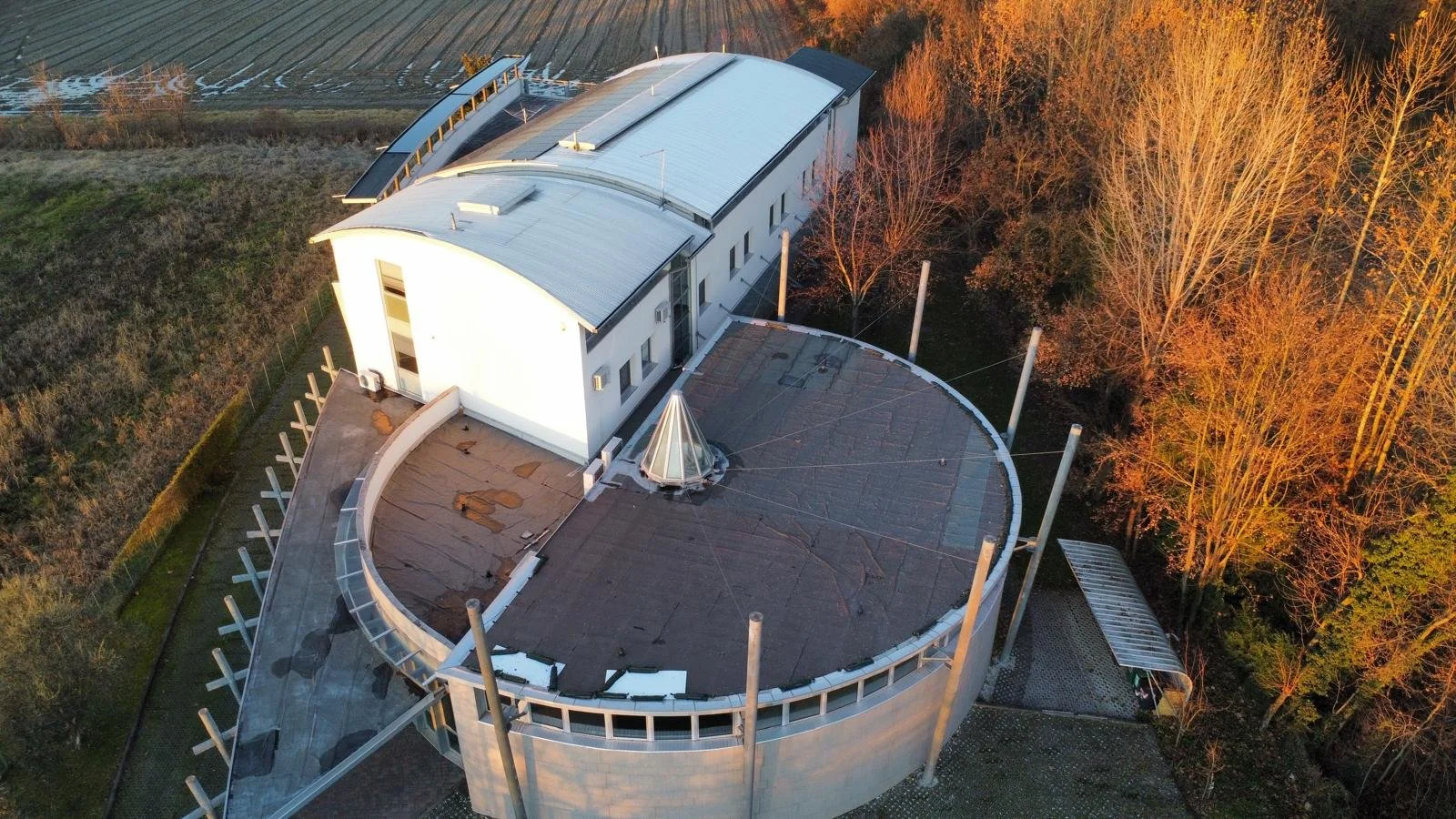
There was a time when there was no word "evangelical," the Protestant Reformation had not yet happened, a book such as "Gospel Declarations" was not available, but people understood what identity was. Solomon chose to delineate his identity through his constructions (2 Chron 2-5). He began with the building of the temple. "In the fourth year of the month of Ziv the foundation of the house of the Lord was laid" (1 Kgs 6:37). That was a major commitment that absorbed him for seven years (1 Kings 6:38). Every day Solomon had to make decisions in accordance with the identity he had confessed: the Eternal God. God was for him at the center and everything referred to Him. Close to the temple, Solomon made other buildings such as the house of the "forest of Lebanon" (1 Kings 7:2), the portico of columns (1 Kings 7:6), the porch of judgment (1 Kings 7:7), and his own house (1 Kings 7:8). It was a plastic way of saying how central the covenant God was. All social, legal, and political affairs depended on what was at the center. The temple was not a happy, circumscribed island, but the inspiring center for everything else. The floor plan of Jerusalem was thus redrawn in function of a center. The Bible tells of the queen of Seba who moved to see "the wisdom of Solomon and saw the house ... and the food" (2 Chron 9:3-4). She saw a concrete faith. To this queen, Solomon not only provided answers to theoretical questions, but he let her see his own wisdom at work. He could show her the effectiveness of his thinking. In his grace God made this queen see a sketch of the future kingdom in which someone greater than Solomon himself would be present (Lk 11:31). Who would come "from the ends of the earth to hear" (Mt 12:42) our wisdom? Who would move to see the reality of our vision of God and His kingdom? This construction seeks to confess a faith, the evangelical faith, and it wants to do so in a visual way. Indeed, it wants to emphasize some of the basic ideas of an authentic evangelical faith.
The name of the street
Work was done so that the street where IFED was being built would not be named after some cardinal, pope or saint, as is often the case, but after an evangelical. It is a way of saying God's right to be there with his witnesses. The Lord allowed Pietro Martyr Vermigli to find a cultural recognition that he was denied in his time. This is God's vindication! Just think, those who will go to the sports field, bowling alley or gymnasium will have to say "Via Pietro Martire Vermigli"! This is a strong initiative against the marginalization of our project. A way to place ourselves in the city with the persuasion of the dignity of the Gospel.
Worship and culture
The building emphasizes that worship and culture are for us two realities deeply intertwined with each other. If one wants to leave a furrow in history, these areas must not be separated. The auditorium is connected to the library and forms a whole with it. Compared to visions that oppose, juxtapose, overlap, these two dimensions, this building wants to emphasize their mutual interdependence. Since its inception, the Institute has been concerned to interpret this need. Since all human life is a worship rendered to some deity, we are committed so that the God we celebrate as church, also fertilizes all dimensions of existence.
Energy saving
Materials were chosen with their cost-effectiveness in mind, but also with energy conservation in mind. Bricks are blocks formed from a mixture of cement and wood that have a particularly effective insulation function. The wood is ground, then mineralized with the help of cement, then laid cold before pouring cement inside. Energy conservation has also been kept in mind for radiant panels. They are not only an element of the furnishings, but should allow for significant energy reduction. This is in accordance with the belief that the environment should be respected because it is God's work that asks us to be good stewards of his varied grace by acting as creatures in the Creator's world.
The pulpit
In the center of the auditorium is the pulpit. The pulpit refers to the need to hear the Word of God and emphasizes its centrality. We know that without it there can be no true faith. Therefore, the columns of the entrance and portico have this point as their center. Not only that. The grooves in the floor also refer to this center for all study, training and research activities. It means that when one finds oneself in the archive, or in the break room, one will not lose the connection with the needs of the Word. It remains the reference for which there is no need to change register at the table or elsewhere. The pillars surveying the various metal structures of the building. At the entrance are twelve pillars on the right and twelve on the left, which may remind one of the twelve tribes and the twelve apostles connected to each other. In the rear part of the building, seven large pillars are clearly visible. Five more pillars are located in the side part. Besides giving the building a special momentum, these numerical symbols may refer to certain biblical values such as the deep connection of God's people through the old and new covenants and also evoke the five Sola of the Reformation.
The auditorium
The auditorium is semicircular in shape because it is to be a place for listening to the Word of God, but also for sharing. God's people must listen to the Word, but they must also participate chorally in God's celebration. Thus, at the center is the Word of God and, like two petals, the symbols ordained by the Lord: baptism and supper. Musical participation will not be concentrated at one point, but spread throughout the auditorium. Participation must not be something formal, but be the echo of the Word in the everyday. The seven columns that support the roof, refer to the days of the week, because true worship is about the week in its entirety. One idea is to place on each column what we read on the first page of the Bible, "It was evening, it was morning, day one; it was evening it was morning, day two." All human life is in fact a daily worship of God or idols. Constructions are the plastic translation of the beliefs one has. They feed on memory, but they are also a bet for the future. I hope that each of you can be proud of the identity you profess and can also find in this building a concrete message of the cultural dimensions of the Christian faith. I do not know how many will come "from the ends of the earth to hear" (Mt 12:42) and see the reality of our vision of God and His kingdom, but we are happy that you are here and will become interpreters of it wherever the Lord places you.